

How Florida’s Aging Population Is Reshaping Primary Care Demand in St. Pete
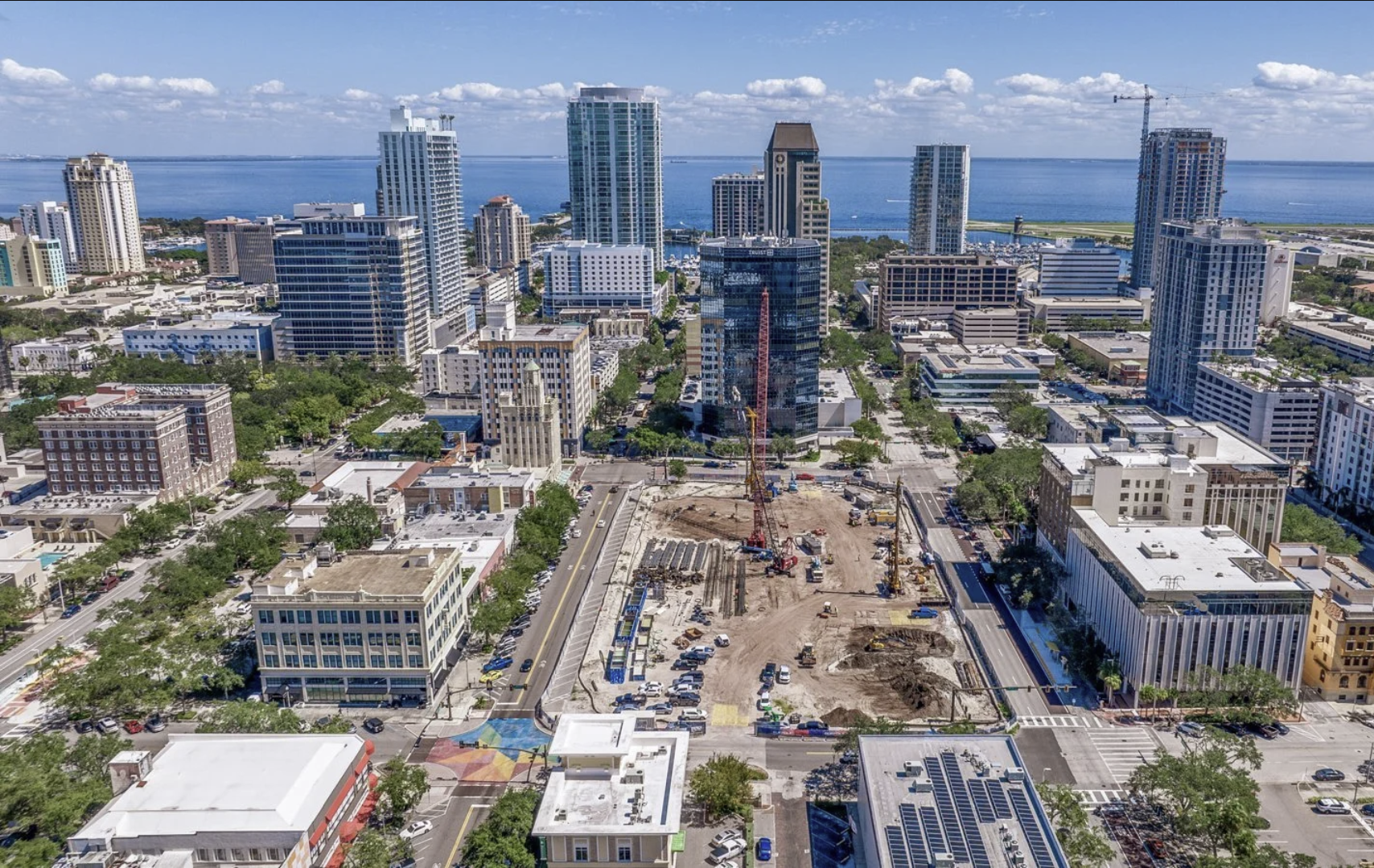
St. Petersburg has long marketed itself as a retirement haven. What’s changed over the last decade is not simply the number of older adults relocating to Pinellas County—but the complexity, expectations, and utilization patterns they bring with them. For primary care physicians, the demographic shift is no longer a trend line; it’s the dominant force shaping panel composition, visit intensity, workforce needs, and financial models.
A Demographic Tipping Point
Florida has one of the highest proportions of residents aged 65 and older in the country, and Pinellas County consistently ranks among the oldest counties in the state. In St. Pete, the senior population is not only large but aging in place. The 75+ and 85+ cohorts are growing faster than the younger Medicare-eligible segment, creating a compression of multimorbidity, polypharmacy, cognitive impairment, and functional decline within already capacity-constrained practices.
The implications for primary care are immediate:
Higher visit frequency per patient
Increased care coordination demands
Greater reliance on chronic care management (CCM) and transitional care management (TCM) services
More frequent interactions with home health, hospice, and long-term care facilities
This is not a simple volume issue; it is an acuity and complexity issue.
The Rise of High-Complexity Panels
Traditional panel metrics are becoming less predictive of workload. A panel of 1,800 patients with a median age of 72 does not behave like a panel of 1,800 patients with a median age of 48.
In St. Pete, primary care physicians are seeing:
Higher prevalence of heart failure, CKD, atrial fibrillation, COPD, and diabetes with complications
Increased cognitive disorders, particularly early and moderate dementia
Escalating rates of frailty and fall risk
Behavioral health comorbidities layered onto chronic disease
These factors drive longer visits, more documentation time, and more non-face-to-face care. The traditional 15-minute model is increasingly incompatible with the clinical reality of geriatric multimorbidity.

Medicare Advantage Penetration and Risk Adjustment Pressures
Pinellas County has high Medicare Advantage (MA) enrollment. This materially alters practice economics and documentation priorities. Risk adjustment accuracy becomes central, not peripheral, to sustainability.
Physicians are experiencing:
Greater scrutiny around HCC capture
Annual wellness visits functioning as both preventive and financial stabilization tools
Increased payer-driven care gap outreach
In many St. Pete practices, the annual wellness visit has evolved from a checkbox service to a cornerstone workflow for stabilizing RAF scores, closing quality gaps, and initiating advance care planning discussions.
Care Coordination Is Now Core Clinical Work
The older population disproportionately utilizes post-acute services. St. Pete has a dense network of skilled nursing facilities, ALFs, and home health agencies. Primary care physicians increasingly serve as the de facto quarterback across fragmented transitions.
Hospital discharge within 7–14 days often generates:
Medication reconciliation complexity
Diagnostic ambiguity from incomplete documentation
Increased risk of readmission without proactive follow-up
TCM billing has become less optional and more operationally necessary. Practices that lack structured transitional workflows are experiencing avoidable utilization and burnout.

Workforce Strain and Team-Based Adaptation
The physician workforce has not expanded at the same rate as the elderly population. As a result, St. Pete practices are adapting with:
Expanded NP/PA integration
Embedded care managers and social workers
Pharmacist-led medication reviews
Remote patient monitoring for heart failure and hypertension
The aging population is accelerating the shift from physician-centric care to interdisciplinary models. In geriatric-heavy panels, team-based care is not an innovation—it is survival.
The Frailty and Homebound Population
Another emerging demand driver is the home-limited patient. As the 85+ population grows, transportation barriers and functional decline increase missed visits and deferred care.
This has catalyzed:
Growth in home-based primary care programs
Hybrid telehealth models for stable chronic disease follow-up
Increased palliative care integration
St. Pete’s density and relatively compact geography make home-based models more feasible than in sprawling metro areas. Still, reimbursement constraints and workforce limitations temper scalability.

Preventive Care vs. Functional Preservation
Preventive care in a geriatric population shifts in emphasis. While cancer screening and lipid management remain relevant, functional preservation and fall prevention increasingly dominate clinical priorities.
Primary care physicians are allocating more time to:
Advance care planning
POLST and goals-of-care conversations
Deprescribing initiatives
Cognitive screening
Caregiver support counseling
These activities improve outcomes but are time-intensive and not always proportionately reimbursed under fee-for-service structures.
Social Determinants and the “Hidden” Complexity
St. Pete’s older population is heterogeneous. Alongside affluent retirees are fixed-income seniors vulnerable to housing instability, food insecurity, and social isolation. Hurricane exposure and climate-related disruptions also disproportionately impact older adults.
Primary care demand now frequently includes:
Resource navigation
Community service coordination
Post-disaster continuity planning
Management of medication access interruptions
Clinical complexity increasingly intersects with social fragility.
Burnout Risk and Structural Response
The cumulative effect is predictable: rising administrative burden layered onto emotionally intensive care. Physicians managing geriatric-dominant panels report higher after-hours documentation time, greater inbox volume, and more frequent family communications.
Sustainable responses in St. Pete are trending toward:
Risk-stratified panel management
Delegation of non-physician tasks
Protected administrative time
Value-based contracts that align payment with complexity
Without structural redesign, demand growth will continue to outpace physician capacity.

What This Means for the Next Decade
St. Petersburg offers a preview of broader national trends. The aging curve is steeper here, but the trajectory mirrors what many U.S. markets will face.
For primary care physicians, the strategic imperatives are clear:
Redesign care models around high-complexity geriatric panels.
Optimize risk adjustment and value-based participation.
Invest in interdisciplinary teams.
Expand home-based and transitional care capabilities.
Prioritize clinician sustainability alongside patient outcomes.
Florida’s aging population is not merely increasing demand—it is transforming the definition of primary care itself. In St. Pete, longevity has become the organizing principle of practice design, financial viability, and workforce strategy. The question is no longer whether demand will rise, but whether systems will evolve quickly enough to meet it.
